

What Is WPC?
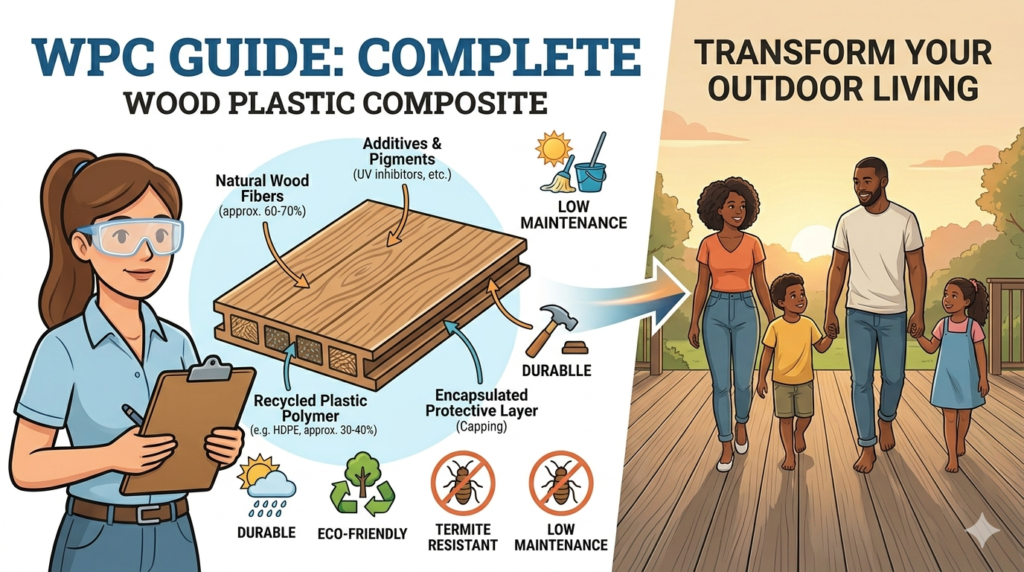
Wood Plastic Composite (WPC) is a modern building material made from a combination of wood fibers and thermoplastics. It is designed to provide the natural appearance of wood while offering enhanced durability, moisture resistance, and low maintenance.
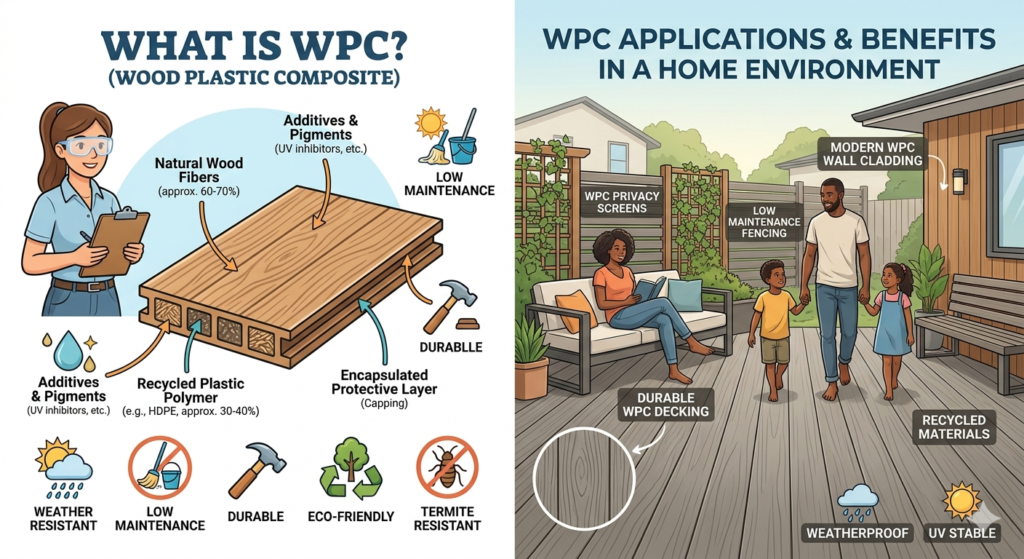
WPC is widely used in construction and outdoor applications such as decking, wall panels, fences, and ceilings. Due to its hybrid composition, it combines the best properties of both wood and plastic.
How Is WPC Made?
WPC is manufactured by blending wood powder (or sawdust) with plastic resins such as polyethylene (PE), polypropylene (PP), or polyvinyl chloride (PVC).
The mixture is then processed through:
- High-temperature extrusion
- Molding into various shapes
- Surface finishing for texture and color
This process results in a material that is strong, weather-resistant, and long-lasting.
Key Benefits of WPC
- Durability
WPC is resistant to rot, decay, and insect damage, making it ideal for long-term use. - Water Resistance
Unlike natural wood, WPC does not absorb water easily, reducing the risk of swelling or warping. - Low Maintenance
WPC requires minimal maintenance compared to traditional wood. No need for regular painting or sealing. - Eco-Friendly
WPC often uses recycled materials, making it a more sustainable option. - Aesthetic Appeal
Available in various colors and textures, WPC can mimic the look of natural wood.
Types of WPC Materials
WPC Decking
Used for outdoor flooring such as patios, gardens, and pool areas.
WPC Wall Panels
Commonly used for interior and exterior wall cladding.
WPC Fencing
Provides privacy and durability for outdoor spaces.
WPC Ceiling
Used in modern interior designs for a clean and elegant look.
Common Applications of WPC
WPC materials are widely used in:
- Outdoor decking
- Garden landscaping
- Exterior wall cladding
- Indoor decorative panels
- Pergolas and fences
Its versatility makes it suitable for both residential and commercial projects.
WPC vs Traditional Wood
| Feature | WPC | Wood |
|---|---|---|
| Maintenance | Low | High |
| Water Resistance | High | Low |
| Durability | Long-lasting | Moderate |
| Eco-Friendly | Yes (recycled content) | Limited |
WPC is generally a better choice for environments exposed to moisture and weather changes.
Is WPC Worth It?
Yes, WPC is worth considering if you are looking for a durable, low-maintenance, and modern alternative to wood. Although the initial cost may be higher than natural wood, the long-term savings on maintenance and replacement make it a cost-effective solution.
Frequently Asked Questions (FAQ)
What does WPC stand for?
WPC stands for Wood Plastic Composite.
Is WPC waterproof?
WPC is highly water-resistant but not completely waterproof. It performs well in wet environments.
How long does WPC last?
WPC can last between 10-25 years depending on quality and usage.
Is WPC better than wood?
WPC is better in terms of durability and maintenance, while wood may offer a more natural feel.
Conclusion
Wood Plastic Composite (WPC) is an innovative material that combines the beauty of wood with the strength and durability of plastic. It is an excellent choice for modern construction, especially for outdoor and high-moisture environments.
As the demand for sustainable and low-maintenance materials continues to grow, WPC is becoming a preferred solution worldwide.

