

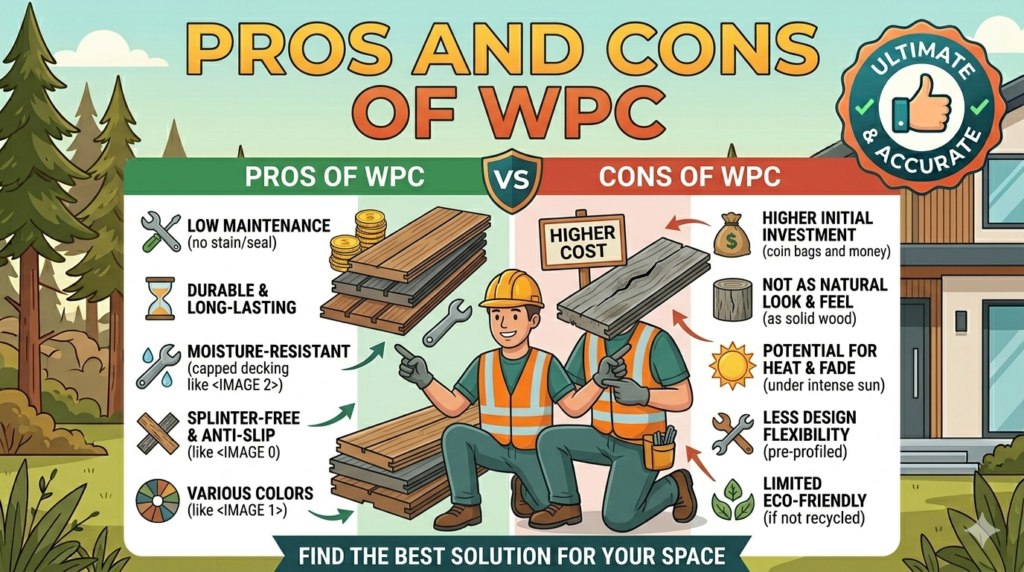
Pros and Cons of WPC
Wood Plastic Composite (WPC) has become a popular alternative to traditional wood for decking, wall panels, and outdoor applications. But before making a purchase, it’s important to understand both the advantages and disadvantages of WPC.
This honest review will help you decide if WPC is the right material for your project.
What Is WPC?
WPC (Wood Plastic Composite) is a material made from a blend of wood fibers and plastic polymers. It is designed to offer the natural look of wood with improved durability and lower maintenance.
Read more about What is WPC?
Advantages of WPC
- Low Maintenance
One of the biggest benefits of WPC is its minimal maintenance requirements.
- No painting or staining
- Easy to clean
- Resistant to mold and insects
- High Durability
WPC is engineered to last longer than traditional wood.
- Resistant to rot and decay
- Does not crack easily
- Withstands weather changes
- Water & Moisture Resistance
WPC performs well in humid and wet environments.
- Suitable for outdoor use
- Ideal for bathrooms and kitchens
- Better than wood in moisture exposure
- Eco-Friendly Material
WPC is often made from recycled materials.
- Reduces deforestation
- Uses recycled plastic
- Sustainable alternative to wood
- Aesthetic Appeal
Modern WPC products come in various designs:
- Natural wood-like texture
- Multiple color options
- Consistent finish
- Easy Installation
WPC systems are designed for quick installation.
- Clip systems available
- No complex tools required
- Faster than traditional wood decking
Disadvantages of WPC
- Higher Initial Cost
WPC is generally more expensive upfront compared to wood.
- Higher material cost
- Installation may also cost more
- Not 100% Natural
Although it looks like wood, WPC is not fully natural.
- Some users prefer real wood texture
- Slightly different feel underfoot
- Heat Retention
WPC can get hot under direct sunlight.
- Dark colors absorb more heat
- May require shade in hot climates
- Quality Varies by Manufacturer
Not all WPC products are the same.
- Low-quality WPC may fade or crack
- Important to choose trusted suppliers
- Limited Structural Strength
WPC is not suitable for heavy structural applications.
- Requires proper subframe
- Not ideal for load-bearing structures
WPC vs Wood: Final Verdict
| Feature | WPC | Wood |
|---|---|---|
| Maintenance | Low | High |
| Durability | High | Medium |
| Cost (initial) | Higher | Lower |
| Lifespan | Longer | Shorter |
| Appearance | Consistent | Natural |
Is WPC Worth It?
Yes, WPC is worth it if you are looking for:
- Low maintenance
- Long lifespan
- Modern and clean appearance
- Better performance in outdoor conditions
It is a smart investment for both residential and commercial use.
Who Should Choose WPC?
WPC is ideal for:
- Homeowners wanting low-maintenance materials
- Businesses with high-traffic areas
- Outdoor projects (decking, fencing, wall panels)
- Modern interior designs
Who Should Avoid WPC?
WPC may not be suitable for:
- Those who prefer 100% natural wood
- Very tight budgets
- Structural construction projects
Read more about WPC is waterproof
Frequently Asked Questions (FAQ)
What are the main disadvantages of WPC?
Higher initial cost, heat retention, and quality variation.
Is WPC better than wood?
For durability and maintenance, yes. For natural aesthetics, wood may be preferred.
Does WPC last long?
Yes, WPC typically lasts between 10 and 25 years.
Is WPC eco-friendly?
Yes, most WPC products use recycled materials.
Conclusion
WPC offers a strong balance between durability, aesthetics, and low maintenance. While it has some drawbacks such as higher upfront cost and heat retention, its long-term benefits make it a worthwhile investment.
If you are planning a decking or interior project, WPC is a modern and reliable material that delivers both performance and style.


