

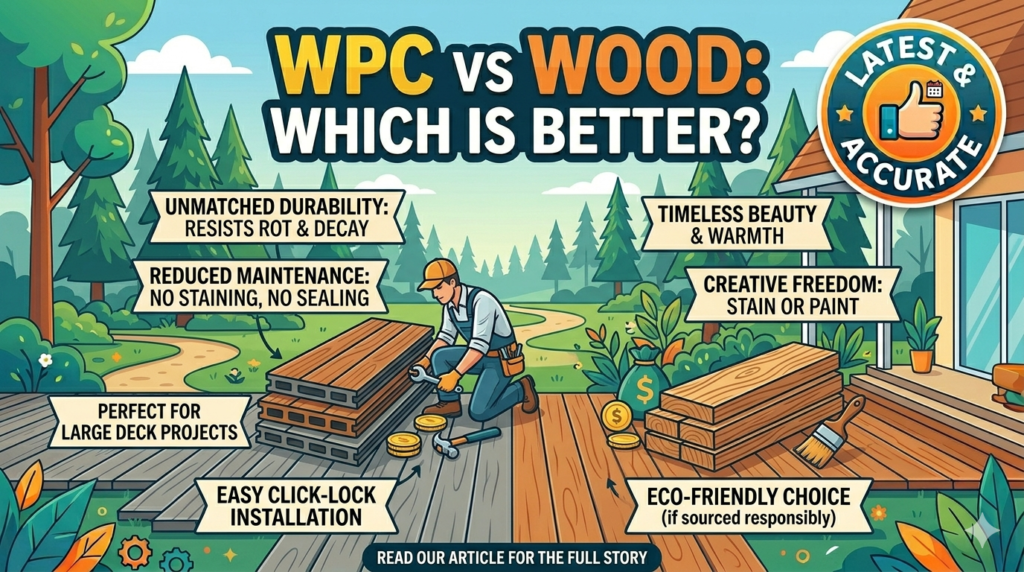
WPC vs Wood: An Overview
When choosing materials for construction or outdoor design, one of the most common questions is: WPC vs wood — which is better?
Wood Plastic Composite (WPC) and natural wood are both widely used, but they offer different advantages in terms of durability, cost, maintenance, and appearance.
This guide will help you understand the key differences so you can make the right decision for your project.
What Is WPC?
WPC (Wood Plastic Composite) is a material made from a mixture of wood fibers and plastic polymers. It is engineered to mimic the look of natural wood while providing better resistance to moisture, insects, and weather.
For a complete explanation, read: What Is WPC?
What Is Natural Wood?
Natural wood is a traditional building material sourced from trees such as teak, pine, or cedar. It is known for its authentic appearance and natural texture.
However, wood requires proper treatment and maintenance to maintain its quality over time.
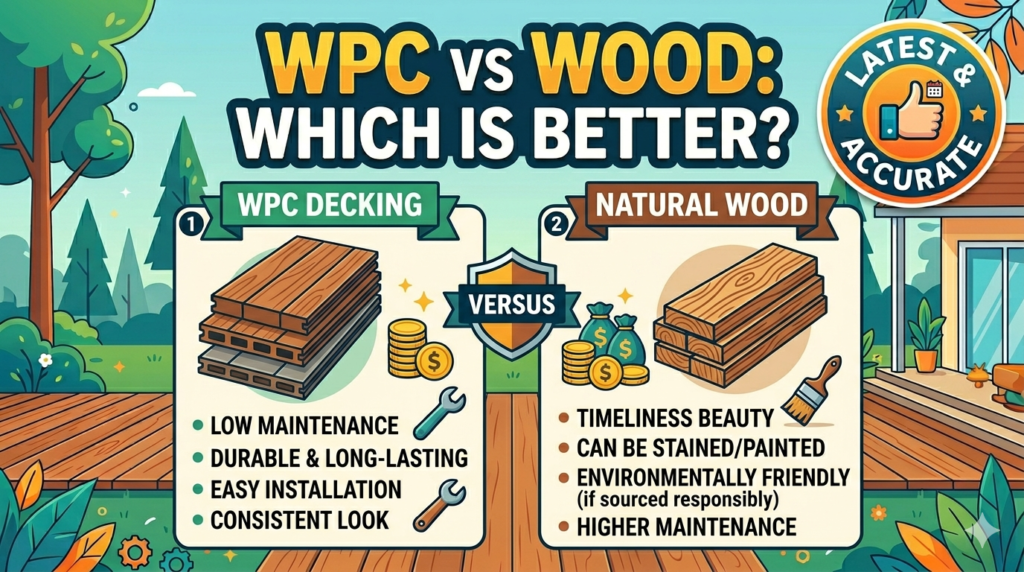
Key Differences: WPC vs Wood
- Durability
WPC: Highly durable, resistant to rot, termites, and weather
Wood: Can decay, crack, or be damaged by insects over time - Maintenance
WPC: Minimal maintenance (no painting or sealing required)
Wood: Requires regular painting, staining, and sealing - Appearance
WPC: Consistent finish, modern look
Wood: Natural grain and authentic feel - Water Resistance
WPC: Highly resistant to moisture and humidity
Wood: Absorbs water, leading to swelling or warping - Cost
WPC: Higher initial cost but lower maintenance cost
Wood: Lower upfront cost but higher long-term expenses - Environmental Impact
WPC: Often made from recycled materials
Wood: Depends on sourcing (can contribute to deforestation)
Read more: WPC Decking: Types, Price & Installation Guide
Comparison Table
| Feature | WPC | Wood |
|---|---|---|
| Durability | High | Moderate |
| Maintenance | Low | High |
| Water Resistance | High | Low |
| Appearance | Modern | Natural |
| Lifespan | 10–25 years | 5–15 years |
| Cost (long-term) | More efficient | Higher maintenance costs |
When Should You Choose WPC?
WPC is the best choice if you need:
- Outdoor durability (decking, fencing, wall panels)
- Low maintenance materials
- Resistance to moisture and termites
- Long-term cost efficiency
When Should You Choose Wood?
Natural wood is suitable if you prefer:
- Authentic and natural appearance
- Traditional design aesthetics
- Indoor applications with controlled environments
WPC vs Wood for Outdoor Use
For outdoor environments, WPC clearly outperforms wood because it can handle:
- Rain and humidity
- UV exposure
- Temperature changes
Wood, on the other hand, requires continuous maintenance to survive in outdoor conditions.
Is WPC Better Than Wood?
In most cases, yes — WPC is better than wood, especially for outdoor and high-moisture applications.
However, wood may still be preferred for projects that prioritize natural aesthetics over durability.
Frequently Asked Questions (FAQ)
Is WPC more expensive than wood?
Yes, WPC usually has a higher upfront cost, but it is more cost-effective in the long run.
Does WPC look like real wood?
Yes, modern WPC products are designed to closely mimic the texture and color of natural wood.
Which lasts longer, WPC or wood?
WPC typically lasts longer due to its resistance to moisture, insects, and weather conditions.
Is WPC eco-friendly?
Yes, WPC is often made from recycled materials, making it a more sustainable option.
Conclusion
The choice between WPC and wood depends on your priorities. If you value durability, low maintenance, and long-term performance, WPC is the better option. If you prefer a natural look and traditional feel, wood may still be suitable.
For most modern construction and outdoor applications, WPC has become the preferred material due to its reliability and efficiency.


