

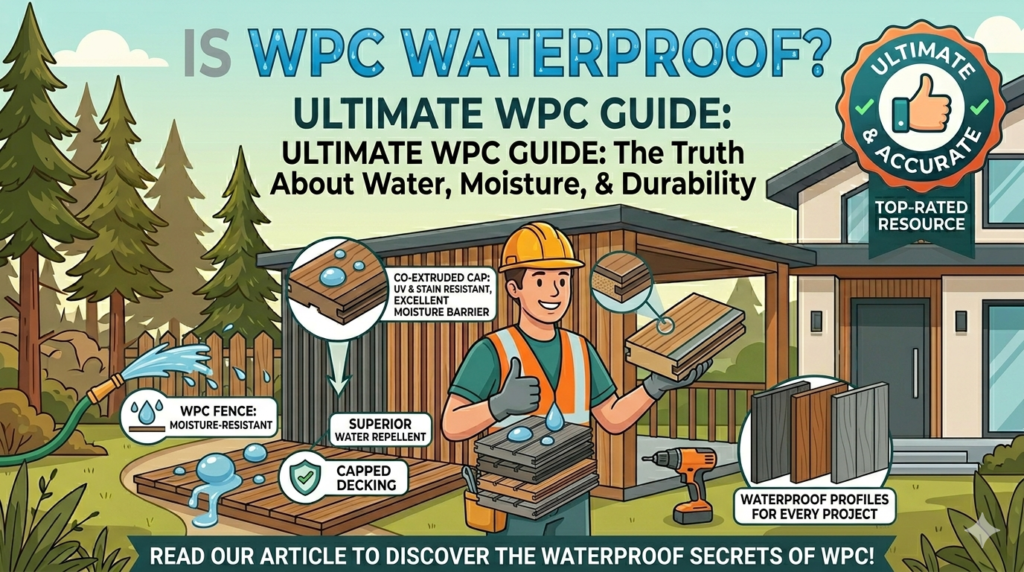
Is WPC Waterproof?
One of the most common questions about Wood Plastic Composite (WPC) is: is WPC waterproof?
The short answer is: WPC is not 100% waterproof, but it is highly water-resistant.
Thanks to its composition of wood fibers and plastic polymers, WPC performs significantly better than natural wood in wet and humid environments.
Why Is WPC Water-Resistant?
WPC is engineered to resist moisture through its material composition:
- Plastic content reduces water absorption
- Wood fibers are encapsulated within polymers
- Additives improve resistance to swelling and decay
This structure helps WPC withstand exposure to rain, humidity, and occasional water contact.
WPC vs Wood: Water Resistance Comparison
| Feature | WPC | Wood |
|---|---|---|
| Water Absorption | Low | High |
| Swelling | Minimal | Significant |
| Rot Resistance | High | Low |
| Maintenance | Low | High |
Can WPC Be Used in Wet Areas?
Yes, WPC is suitable for many wet or humid environments, including:
Outdoor Areas
- Decking and patios
- Poolside flooring
- Garden pathways
Indoor Areas
- Bathrooms (wall panels)
- Kitchens
- Laundry rooms
However, proper installation and drainage are essential to ensure long-term performance.
Read more about How much does WPC cost?
Is WPC Suitable for Pool Areas?
Yes, WPC decking is commonly used around swimming pools because:
- It is slip-resistant
- It does not easily warp or crack
- It handles constant moisture better than wood
What Happens If WPC Gets Wet?
When exposed to water:
- WPC does not absorb water like wood
- It may retain surface moisture temporarily
- It dries naturally without damage
However, prolonged exposure to standing water should be avoided.
Limitations of WPC in Water Exposure
Although WPC is water-resistant, it has some limitations:
- Not suitable for full submersion (e.g., underwater use)
- Poor drainage can reduce lifespan
- Lower-quality WPC may absorb more moisture
How to Improve Water Resistance
To maximize WPC performance in wet environments:
- Ensure Proper Drainage
Avoid water pooling under or around the material. - Use High-Quality WPC
Choose co-extrusion or premium-grade products. - Install with Proper Spacing
Allow airflow between boards or panels. - Clean Regularly
Prevent mold or dirt buildup in damp areas.
Read more about WPC vs Wood, Which is a better?
Is WPC Better Than Wood for Wet Environments?
Yes, WPC is a much better choice than wood in wet conditions because:
- It resists water absorption
- It does not rot or decay easily
- It requires less maintenance
Frequently Asked Questions (FAQ)
Is WPC 100% waterproof?
No, WPC is not completely waterproof, but it is highly water-resistant.
Can WPC be used in bathrooms?
Yes, WPC wall panels are suitable for bathroom use due to moisture resistance.
Does WPC absorb water?
WPC absorbs very little water compared to natural wood.
Can WPC be used underwater?
No, WPC is not designed for continuous underwater use.
Conclusion
WPC is not fully waterproof, but its high level of water resistance makes it an excellent choice for both indoor and outdoor applications. Compared to wood, WPC offers better durability, lower maintenance, and improved performance in wet environments.
If you are looking for a material that can handle moisture without constant upkeep, WPC is a reliable and modern solution.


